Buy Tickets
Doors 6:30pm / Screening 7pm
$15 / free or discounted for members
Curated & presented by Bradford Nordeen in association with Dirty Looks, The Lab and San Francisco Cinematheque
This program was initially organized in collaboration between Dirty Looks and LA Filmforum
This screening is dedicated to Agosto Machado (????–2026)—“a lady never tells.”
Jack Smith was an underground visionary in every sense of the word. Jack poured glitter into everything he made: pasty creatures, plastic fantasias and moldy monsters. He was a performance artist, filmmaker, playwright, photographer, socialist, aesthete, installation artist, scene-stealer, writer, interventionist. He built a theater and movie-studio in his rickety loft out of street debris; an intricate and child-like universe, Cinemaroc, was equal parts Baroque and broke. For a contingency of art and theater fags and dolls, Jack, as Charles Ludlam once eloquently put it, “is the daddy of us all.” And quixotically, the fact that he remains a somewhat underground or cult figure, as opposed to canonized creature, attests to his legacy.
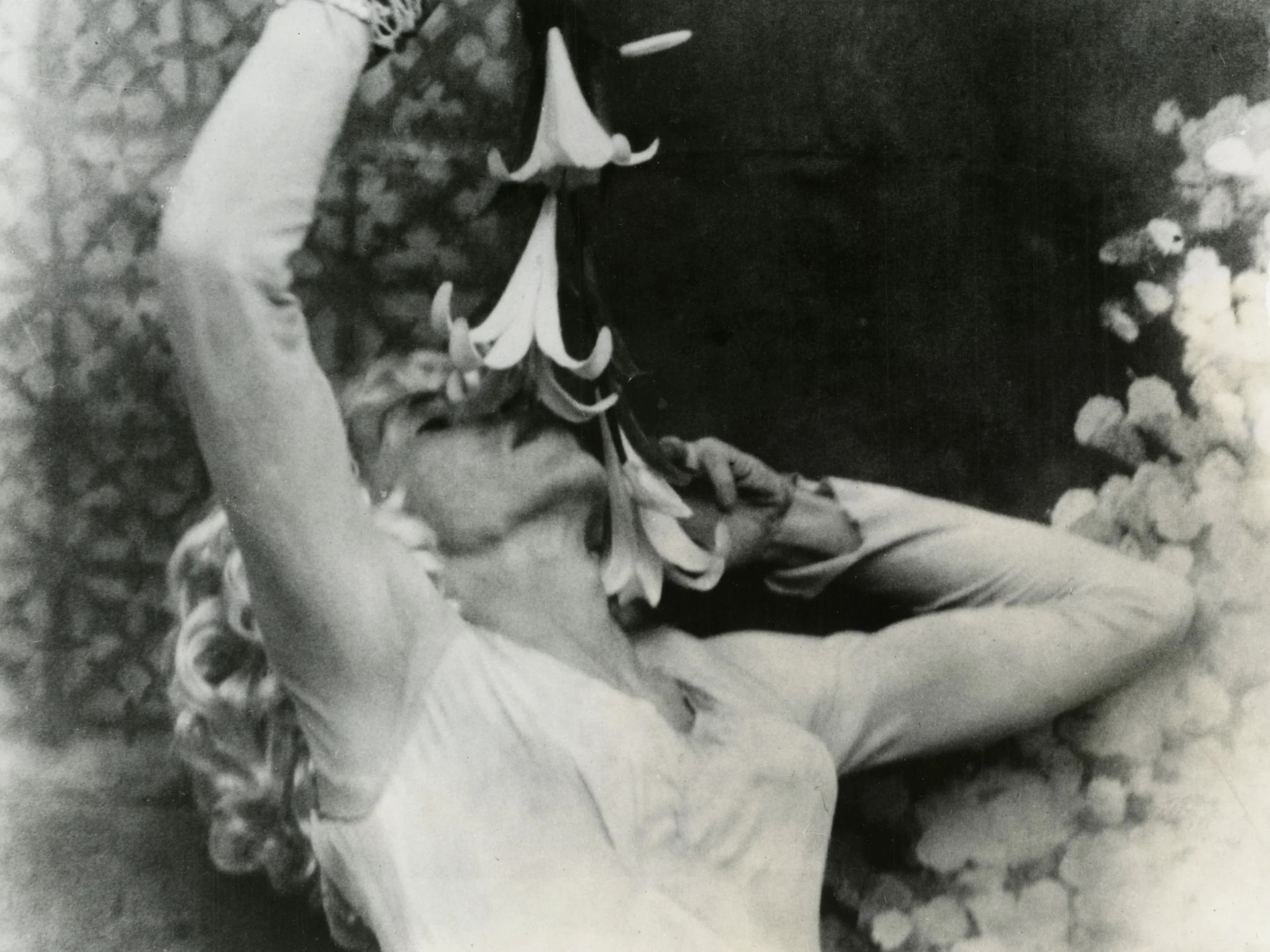
Best known as a filmmaker, Jack made wild, indeterminable pictures. Flaming Creatures was his first finished film. Well, in truth, it’s his only finished film, since it ricocheted out of his hands when a trend of underground film raids made his opus a trophy for either side of a decency debate. Seized at the same time as Jean Genet’s Un chant d’amour (1950) and Kenneth Anger’s Scorpio Rising (1963), Creatures made it all the way to the Supreme Court, who could detect little value in its over-exposed rumpus of genitalia, transvestitism, baroque orgies and dance dervishry. Meanwhile, Susan Sontag and Jonas Mekas heralded the film as high art, hijacking (so Jack saw it) his vehicle to bolster their tastemaker status. So, Jack moved forward making movies that couldn’t be screened without him. He shot epics and edited them in front of you. Normal Love (1963), No President (1969), I Was a Male Yvonne de Carlo (1967). A screening could be ten minutes or four hours, as Jack huddled in the back with the projector, throwing on scarred 78s to make the soundtrack, chopping up and taping together filmstock like it was sculpture.
This was but one of the many ways that Jack restlessly performed. He also hosted theater pieces in his Greene Street loft that were both must-sees of the ‘70s art world and dubious endeavors. He would host an event at midnight and allow the audience to linger for four, maybe five hours before stepping onto the stage. Because for Jack, life was art, life was theater. There was no distinction, really, between the prelude and the event. Which reflected Jack’s status as a fierce anti-capitalist. Waiting became a concentrated practice, as important as the paid-for spectacle. Waiting was participatory. After the irate had fled, Jack would commence. Those who remained were dedicated, not “the scum of Baghdad. (Bradford Nordeen, from “What’s Underground?: The Films of Jack Smith” published by Slant, April 15, 2011)
Appearing in the films are luminaries Jack Smith, Mario Montez, Francis Francine, Judith Malina, Tony Oursler and Tiny Tim. Flaming Creatures was produced for $300.
SCREENING: Scotch Tape (1959-62), 16mm, b&w, sound, 3 minutes; print from Canyon Cinema/courtesy of the Gladstone Gallery. Yellow Sequence (1963-65), 16mm, color, sound, 15 minutes; print from Canyon Cinema/courtesy of the Gladstone Gallery. Flaming Creatures (1962), 16mm, b&w, sound, 43 minutes; print from Canyon Cinema/print courtesy of Gladstone Gallery. Song for Rent (1969), 16mm, color, sound, 4 minutes; print from Canyon Cinema/print courtesy of the Gladstone Gallery. Hot Air Specialists (1980), 16mm, color, sound, 7 minutes; print from Canyon Cinema/print courtesy of the Gladstone Gallery.